Dutch ports are among the most technologically advanced and environmentally friendly logistics hubs in Europe. In recent years, they have significantly accelerated investments in onshore power supply (shore power / OPS) and smart energy systems, with the wide availability of European Union funding acting as a major catalyst.
Thanks to programmes such as the Connecting Europe Facility (CEF), initiatives supporting alternative fuel infrastructure, and instruments for modernising energy networks, ports in Rotterdam, Amsterdam, Vlissingen and Groningen are speeding up their green transition and gaining a competitive edge in the European supply chain.
Why onshore power is strategic
A modern urban port faces two parallel challenges: pressure to reduce pollutant emissions and the need to handle a growing number of vessels that still rely on traditional auxiliary engines.
OPS (Onshore Power Supply) technology allows vessels to switch off their own generators while berthed and use electricity supplied directly from the quay. This reduces:
- emissions of CO₂, NOx, SOx and particulate matter,
- noise generated by ships,
- operational costs for vessels,
- the nuisance of port operations for residents.
In cities like Rotterdam and Amsterdam this is especially important: both ports are embedded in densely populated areas and have long pursued policies to improve air quality.
EU funding accelerates investment
Dutch ports actively use EU funds to support:
- the design, construction and modernisation of OPS stations,
- reinforcement of local electricity networks,
- digitalisation of quay infrastructure,
- pilot projects for powering different vessel classes,
- development of energy management systems and integration of renewables.
Equally important are funds for the modernisation of high-voltage grids, which allow for seamless delivery of power to terminals with very high energy demands, such as container terminals and cruise ship berths.
Rotterdam and Amsterdam – the most advanced projects
Port of Rotterdam — Europe’s largest port — is running an extensive programme to expand its OPS infrastructure. This includes:
- onshore power for passenger vessels and offshore units,
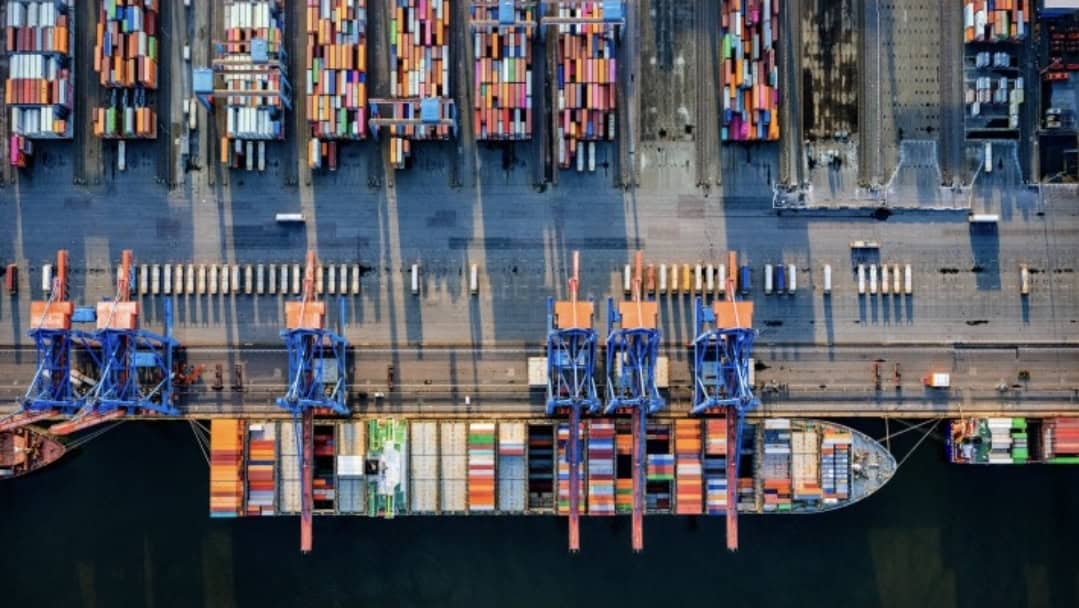
- installations for container terminals at Maasvlakte,
- cooperation with energy operators to increase grid capacity.
The port also partners with private-sector stakeholders to create financial models that allow terminals to implement shore power as a service, lowering investment costs and enabling faster scale-up.
Port of Amsterdam, meanwhile, is actively developing OPS for passenger vessels, inland shipping and ships serving local industry. The port authority is also investing in infrastructure for powering heavy electric equipment, preparing quays for zero-emission vessels, and integrating its grid with hydrogen projects.
Local impact and benefits for cities
Onshore power brings tangible benefits to residents and to the port environment:
- reduced night-time noise,
- lower levels of local air pollution,
- improved quality of life in neighbourhoods closest to the port,
- less environmental impact from mass and tourist shipping.
In Rotterdam and Amsterdam, where the port directly borders the urban fabric, these effects are particularly visible and support long-term climate-neutrality strategies.
Challenges remain
Despite the dynamic development of OPS infrastructure, Dutch ports still face several barriers:
- Energy availability — not all local grids are prepared for the high loads required by OPS.
- High installation costs — constructing high-voltage substations, transformers and underground cabling is expensive.
- Technical standardisation — different vessel classes require different power parameters.